|
|
News Releases |
||||||||||||||||||||
|
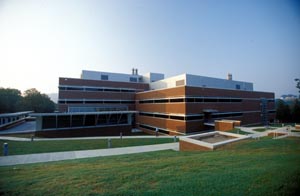
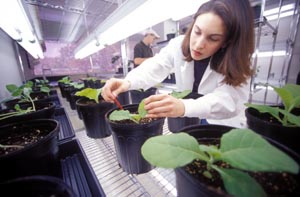
(KNOXVILLE, Tenn.) - Most people are familiar with vitamin-enriched cereals and calcium-fortified orange juice now available in supermarkets today. But new tools used worldwide in plant biotechnology research are making huge strides in producing foods with special health benefits such as genetically engineered potatoes used to make a cancer-fighting vaccine, golden rice with added beta carotene, and lycopene-enhanced tomatoes. The state of Tennessee is about to take a giant step forward into this realm of complex scientific inquiry when the University of Tennessee Institute of Agriculture dedicates a new $22 million Plant Biotechnology Building on Thursday, Oct. 16. The facility is expected to generate new products and industries, create jobs, and expand markets and demand for Tennessee's agricultural products and enterprises. The dedication is set for 5 p.m. (EDT) at the new facility, which is located in the heart of the UT agricultural campus on Chapman Drive in Knoxville. Dr. Jack Britt, UT vice president for agriculture, will preside over the ceremony, which includes remarks by James McElroy, president of the Tennessee Biotechnology Association, and Dr. Joseph E. Johnson, UT interim president. Dr. Neal Stewart, who holds the Racheff Chair of Excellence in plant molecular genetics at UT, is also on the program. Stewart is internationally known for biosafety research with genetically modified plants. Researchers in his laboratories focus on genetic modification for crop improvement and environmental applications including plants that act as phytosensors in the environment. His work is showing that plants can be used to detect plant diseases, explosives, pollutants, and potential agents of terrorism and destruction.
Approximately 200 invited guests from around the world are expected to attend the event, which will also kickoff a scientific symposium related to tree biotechnology and genomics. The evening will include a ribbon cutting, reception, poster presentations, and tours of the 81,000 square-foot building. "This new facility will have a tremendous impact on the ability of our scientists to compete worldwide for funding as well as for the best students and scholars to work in plant biotechnology in Tennessee," said Britt. The new building is the "crown jewel" of a $38 million, three-building complex that has been added to UT's agricultural campus since 1999. Other components include the Joseph E. Johnson Animal and Teaching Unit and the Tennessee Forest Products Laboratory. Federal and state funding were used to construct the new buildings, which have been on the drawing board for more than a decade. "The Plant Biotechnology Building symbolizes UT's commitment to put knowledge to work and do first-class research that's important to science and to the quality of life and economy in Tennessee," added Caroline Young of the Tennessee Biotechnology Association. The woody plant biotechnology symposium is scheduled to continue Friday, October 17, featuring Dr. C. S. Prakash, who is internationally known for his research on food crops and for his outreach efforts regarding the impact of biotechnology on society and the world's food supply. Prakash is director of the Tuskegee University Center for Plant Biotechnology Research. For additional information, about the dedication or symposium, contact Neal Stewart, UT Professor and Racheff Chair of Excellence in Plant Molecular Genetics, at 865-974-7324. ### Contacts: Dr. Neal Stewart, UT Professor and Racheff Chair of Excellence in Plant Molecular Genetics, at 865-974-7324; or Amy Yancey, 865-974-8622
|
|||||||||||||||||||
|
Copyright ©2003 The University of Tennessee ·
Institute of Agriculture · Knoxville Tennessee 37996-4505
· 865/974-7342 Contact the Webmaster at webmaster@ext1.ag.utk.edu · Disclaimer |
|